SEO vs AEO vs GEO: Why B2B Marketers Are Optimizing for the Wrong Thing
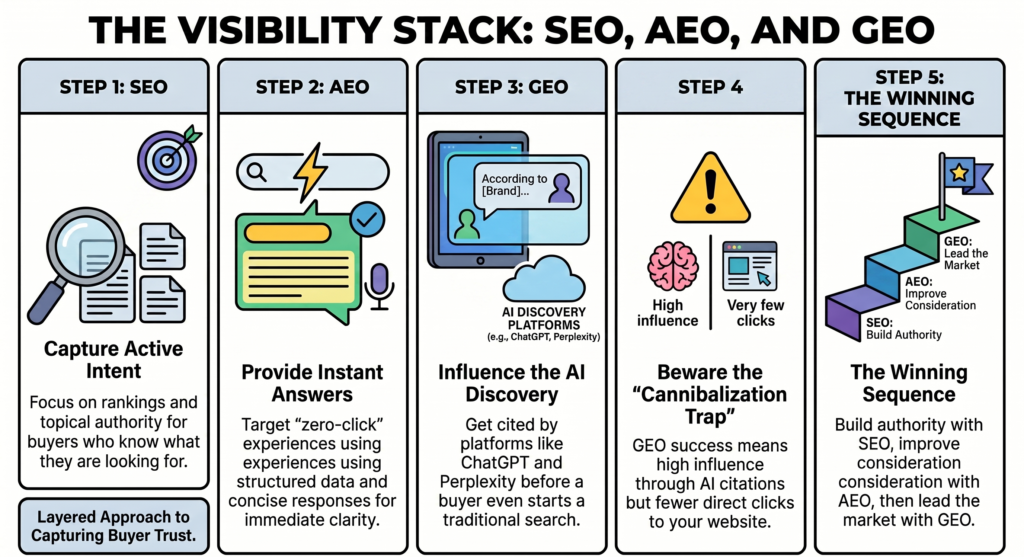
Most B2B content programs are running an SEO strategy while gesturing at GEO and AEO. They’re adding FAQ schemas, writing longer articles, and calling it “AI optimization.” That’s not a visibility strategy – that’s SEO with extra steps. The real difference between SEO, AEO, and GEO is not the platform they target. It’s the buyer […]
What Is AEO (Answer Engine Optimization) and Why Your Content Strategy Is Already Behind
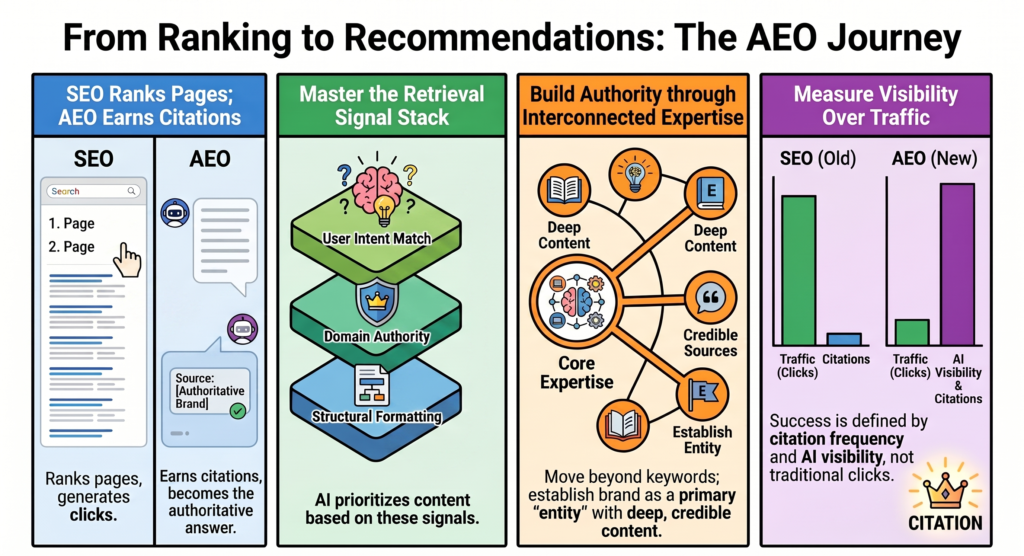
Most content teams heard “AEO” and assumed it meant writing shorter paragraphs and adding FAQ sections. That assumption is costing them visibility they do not know they are losing. Answer engine optimization is not a formatting upgrade to your existing content strategy – it is a fundamentally different model of how content gets discovered, selected, […]
SEO + AEO: How Buyers Actually Find You in 2025

B2B buyers are now forming vendor preferences inside AI-generated answers – before they run a single search that could send them to your site. Most marketing teams are still optimising for that second event. The first event, the one that shapes how a buyer frames the problem and which vendors they consider credible, is happening […]
Why “Posting Content” Isn’t a Strategy – And What B2B Teams Get Wrong Instead
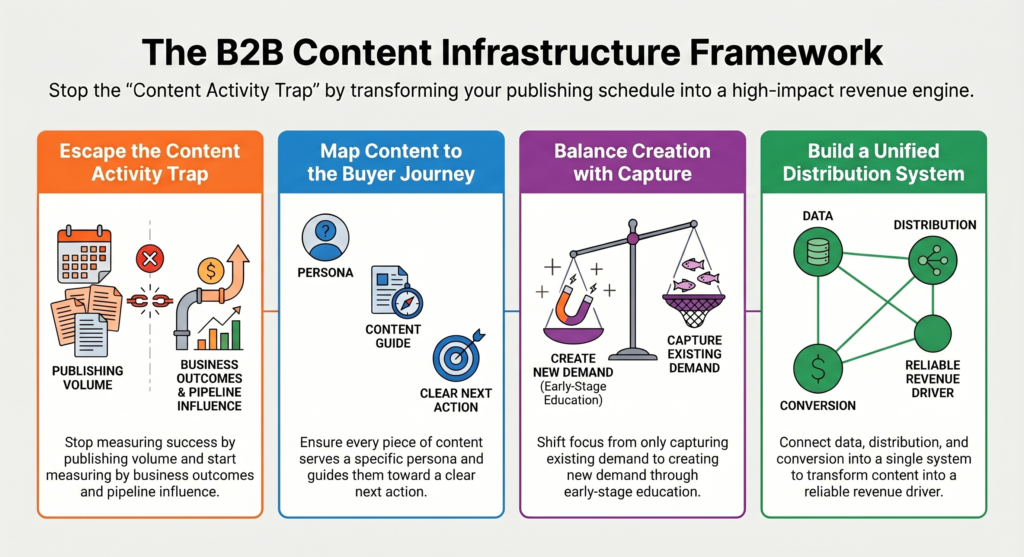
Most B2B content programs are not under-resourced. They are misdirected. The team is publishing. The calendar is full. The blog is active. And yet, when leadership asks what content is doing for pipeline, the answer is a combination of traffic numbers, engagement rates, and a quiet acknowledgement that the connection to revenue is unclear. That […]
Content-to-Pipeline Attribution Explained: The Framework B2B Teams Actually Need
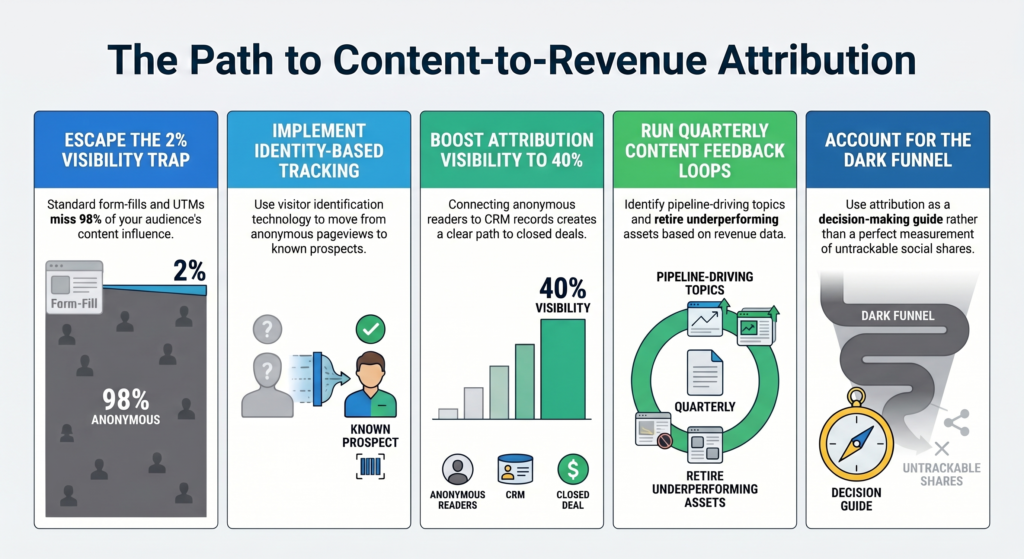
Content-to-pipeline attribution is not an analytics problem. It is a demand infrastructure problem. Most B2B marketing teams are trying to solve it by installing better tracking tools – and ending up with more sophisticated dashboards that still change nothing in the content calendar. The real fix requires three things: an identity layer that connects anonymous […]
Email Nurture Systems That Build Intent
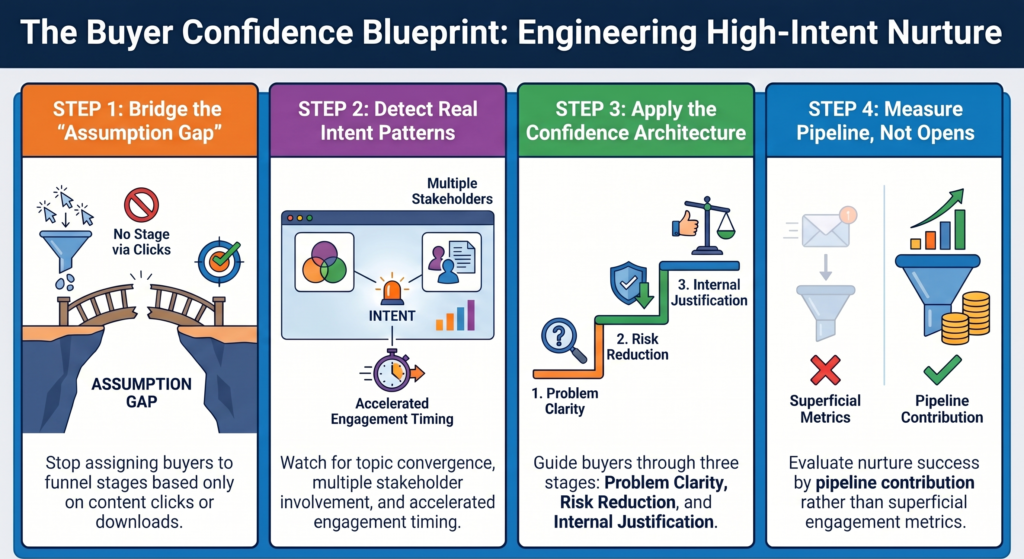
Most email nurture programs are not systems. They are broadcast schedules with personalization tokens – sequences built around what marketing teams believe buyers need, sent at intervals marketing teams find convenient, measured by metrics that confirm activity without confirming progress. They fail not because of poor content or insufficient sends. They fail because they are […]
Case Study Architecture That Converts

Most architecture case studies are built for the wrong reader. They document what was constructed, not what was solved. They perform for awards panels, impress peers, and generate admiration – but they don’t generate enquiries. The fix is not better photography or a longer project narrative. The fix is structural. A case study that converts […]
Content That Moves Buyers Before Sales: The Architecture Most B2B Teams Are Missing

Most B2B content doesn’t move buyers because it was never designed to. It was designed to rank, to fill a calendar, or to give the sales team something to send. A content programme that actually moves buyers before sales requires three things most teams skip entirely: awareness-stage sequencing, distribution architecture, and signal instrumentation. Without all […]
Thought Leadership That Actually Generates Pipeline
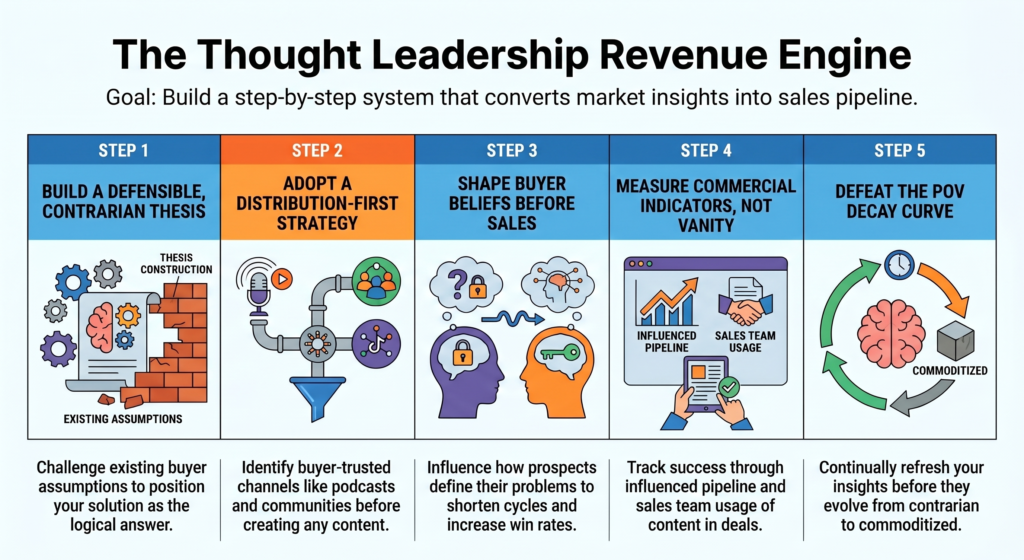
Most thought leadership programmes are designed in the wrong direction. Content gets created first, distribution gets figured out later, and accountability never appears. The result is a programme that produces impressive impression counts and zero pipeline. A thought leadership programme that drives commercial outcomes works the opposite way: it starts with the distribution channel that […]
Why Strategy Without Execution Fails – And What an Execution System Actually Looks Like
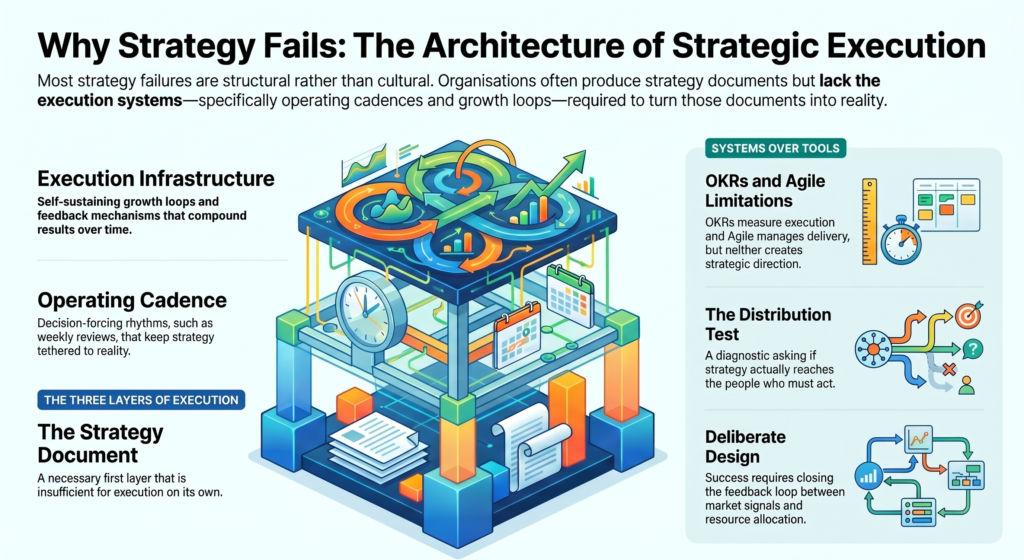
Most strategy failures are not execution failures. They are infrastructure failures. The organisation never built the machine that converts a strategic plan into compounding action – it built a document instead, and then wondered why nothing moved. This is not a people problem. It is not a culture problem. It is a structural problem with […]